
Phase 1
Pain
Settle the symptoms.
We calm the neck tension and headaches feeding your symptoms, and set a daily activity level your symptoms can handle.
What We Treat
The room that tilts when you roll over in bed. The headache that builds every time you look at a screen. You don’t have to sit in a dark room and hope it passes. Care starts with a cause-first evaluation, one-on-one with a Doctor of Physical Therapy, every visit.
Sound Familiar?
Two or more? Keep reading.
Why It Happens
Your balance runs on three systems working together: your inner ear, your eyes, and the sensors in your neck and body. After a concussion, a whiplash, or an inner ear problem, those signals can stop matching. Your brain gets mixed messages. You feel it as dizziness, fog, headaches, or unsteady footing. Sometimes a stiff, sore neck is feeding the headaches too.
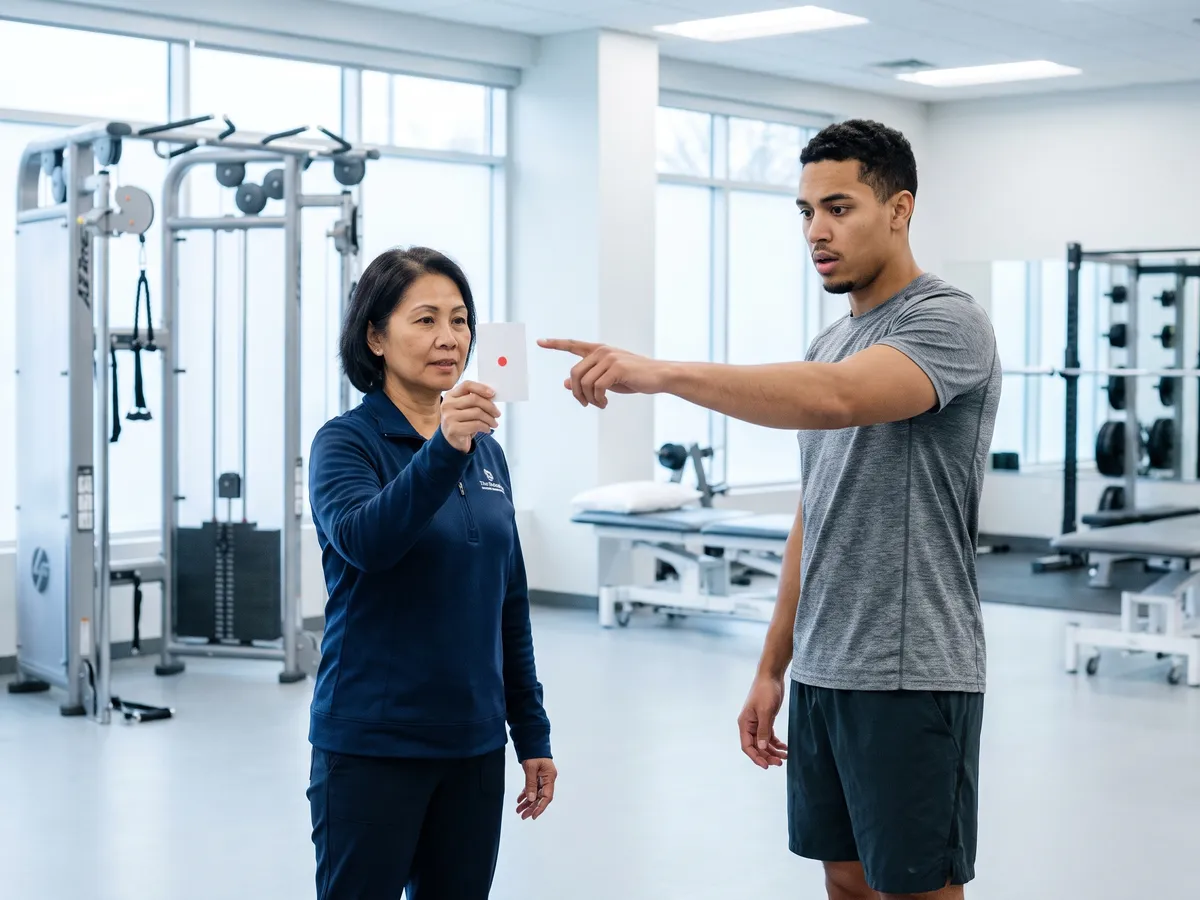
Dr. Mills does not diagnose concussions. That call belongs to your physician. What she does is test how your inner ear, eyes, neck, and balance are working, find which piece is off, and treat it. Resting in a dark room rarely retrains a system that needs practice. Find the real driver, and the plan gets clear.
The Honest Truth
You’re the athlete who shakes it off and gets back in. That’s exactly why the symptoms are still hanging around. Let’s treat them properly.
How We Fix It
Every plan has an endpoint. Here’s what the four phases look like for dizziness and post-concussion symptoms.
Phase 1
Pain
We calm the neck tension and headaches feeding your symptoms, and set a daily activity level your symptoms can handle.
Phase 2
Prime
Vestibular and eye exercises, dosed to your symptoms, teach your brain to trust its balance signals again.
Phase 3
Perform
Graded return to activity: more movement, more speed, more challenge, one step at a time as your symptoms allow.
Phase 4
Prevent
Sport and daily demands get tested before you’re back to full activity, with your physician’s clearance where it’s needed: that’s the endpoint.
Amanda Mills does a great job of identifying the problem that you are having and not just treating the symptoms but the root of the problem. She is great about explaining the steps needed in the process taken in order to achieve the goal. I can’t recommend her more highly. She personally overseas your physical therapy from start to finish. She is genuinely excited about educating her patients as they go through their rehabilitation. She also takes the time to listen to her clients so that she can better understand how to treat them, not just at the beginning, but every visit. You don’t need a referral and she runs your insurance before you even step foot in the building so you are ready to go. The first visit is extensive so she can collect as much information so she can properly treat you. I highly recommend Amanda.
Shared by Mark H. · Concussion & vestibular
The goal: find the root of the problem, not just treat the symptoms
Every step explained, overseen from start to finish, every visit
Questions, Answered
If you have red-flag symptoms, yes. See a physician or go to the ER right away for a worsening headache, repeated vomiting, confusion, slurred speech, weakness or numbness, a seizure, or passing out. Dr. Mills does not diagnose concussions. Once serious problems are ruled out, you don’t need a referral to start therapy for dizziness, balance, or post-concussion symptoms, and she’ll work alongside your physician when needed.
Usually, yes, when it’s dosed right. Long stretches of total rest can leave your balance system out of practice. Dr. Mills starts with exercises matched to your symptoms, watches how you respond, and progresses only as you’re ready. Some exercises may briefly stir up mild symptoms, and she keeps that controlled. If something feels wrong, you stop and tell her.
It depends on what we find at your evaluation, so we won’t guess before we’ve seen you. What you will get is a plan with an endpoint. Your care moves through four phases, Pain, Prime, Perform, and Prevent, and you’ll always know which phase you’re in and what’s left for your dizziness and post-concussion symptoms. Care is one-on-one with a Doctor of Physical Therapy, every visit, not an open-ended string of appointments.
Book Your Visit
Request a time and a real person calls you back during office hours. No phone tree. No ‘someone will reach out.’ Just a plan.
5.0 · 64 Google reviews
Step 1 of 5
That’s the hard part done. We’ll call during office hours, Monday to Friday, to lock in your time.
Visit Us