Phase 1
Pain
Calm the pain down.
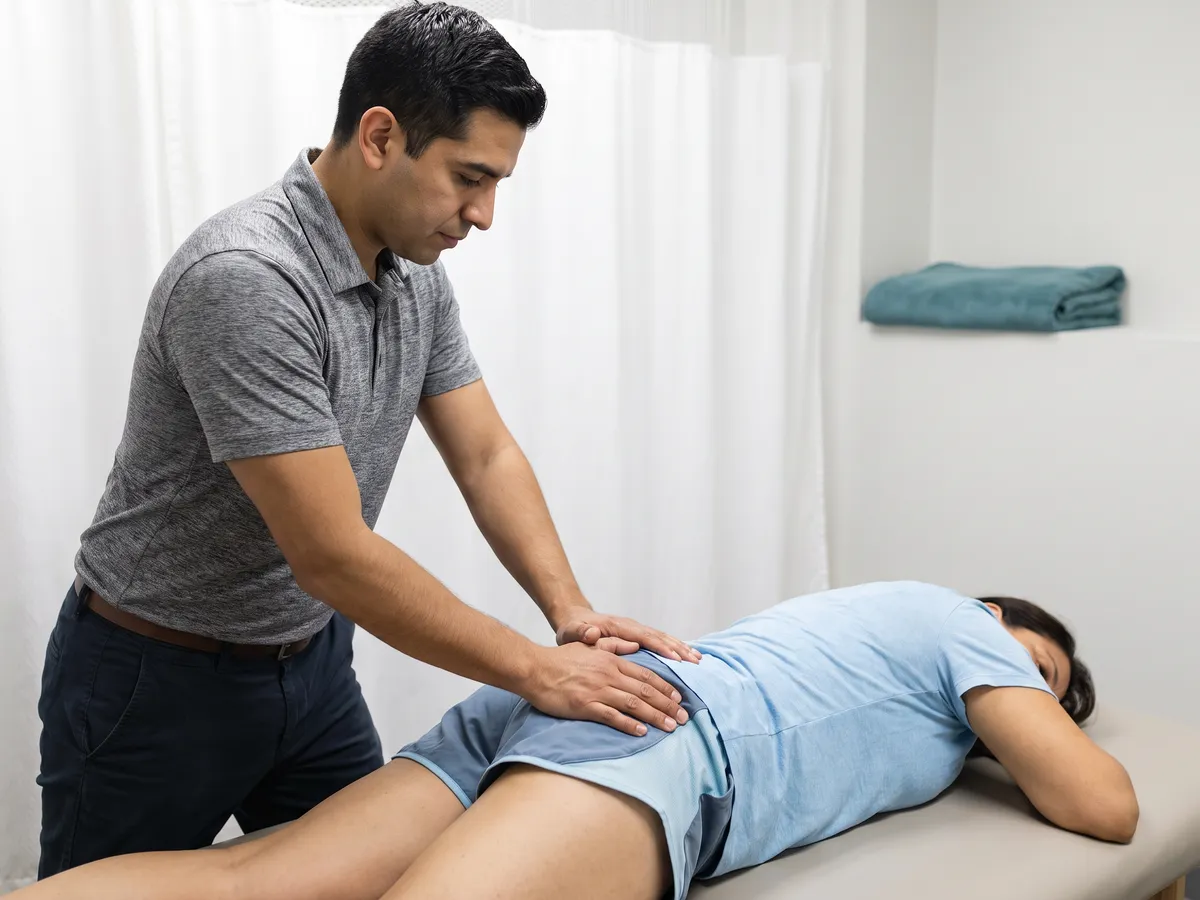
Hands-on techniques like manual therapy, and dry needling if it fits, take the edge off irritated muscle and tendon, starting your first visit.
What We Treat
The pinch in your hip crease when you climb out of the car. The ache on the outside that wakes you when you roll over. It’s fixable, and it starts with a cause-first evaluation, not a guess.
Sound Familiar?
Two or more? Keep reading.
Why It Happens
Your hip doesn’t hurt for no reason. And it’s rarely just one thing. It’s usually some mix of a few culprits. Tendons on the outside of the hip that got overloaded. A stiff joint that stopped moving through its full range. Glutes and core that stopped carrying their share. And daily habits, how you sit, run, lift, and climb stairs, that keep loading the same spot before it settles.
Sometimes the hip isn’t even the source, and your back is sending the pain there. None of that shows up on a quick glance. It takes a real, cause-first evaluation to sort out what’s actually driving your pain. That’s why rest and a generic stretching sheet so often fall short. Find the real cause, and the fix gets obvious.
The Honest Truth
You’re the one who trains through it. That’s exactly why it’s still hurting.
How We Fix It
Every plan has an endpoint. Here’s what the four phases look like for a hip. How long each one takes depends on what we find.
Phase 1
Pain
Hands-on techniques like manual therapy, and dry needling if it fits, take the edge off irritated muscle and tendon, starting your first visit.
Phase 2
Prime
Mobility work restores the hip rotation and extension you’ve been quietly guarding.
Phase 3
Perform
Progressive glute, core, and single-leg strength builds the support your hip was missing in the first place.
Phase 4
Prevent
Running, squatting, and stair mechanics get tested under real load before you go all-in: that’s the endpoint, not just another appointment.
Amanda Mills does a great job of identifying the problem that you are having and not just treating the symptoms but the root of the problem. She is great about explaining the steps needed in the process taken in order to achieve the goal. I can’t recommend her more highly. She personally overseas your physical therapy from start to finish. She is genuinely excited about educating her patients as they go through their rehabilitation. She also takes the time to listen to her clients so that she can better understand how to treat them, not just at the beginning, but every visit. You don’t need a referral and she runs your insurance before you even step foot in the building so you are ready to go. The first visit is extensive so she can collect as much information so she can properly treat you. I highly recommend Amanda.
Shared by Mark H. · Root-cause care
Just treating the symptoms
Treating the root of the problem, from start to finish
Questions, Answered
Usually not. A scan can show what a hip looks like, but not always what’s causing the pain. We start with a hands-on, cause-first evaluation of how your hip, back, and legs move. If anything points to a problem that needs imaging or a physician, we’ll tell you and point you to the right next step. You don’t need a referral to start.
Not when it’s the right exercise at the right dose. Hurt doesn’t always mean harm, and total rest tends to leave a hip stiffer and weaker. Dr. Mills picks the movements your hip can handle now, then progresses them as it settles. You’ll know what to do at home, and what to skip for now.
It depends on what we find, so we won’t guess before we’ve evaluated your hip. What you will get is a plan with an endpoint. It runs through the four phases, Pain, Prime, Perform, and Prevent, and you’ll always know which phase you’re in and what’s left. No open-ended string of appointments.
Book Your Visit
Request a time and a real person calls you back during office hours. No phone tree. No ‘someone will reach out.’ Just a plan.
5.0 · 64 Google reviews
Step 1 of 5
That’s the hard part done. We’ll call during office hours, Monday to Friday, to lock in your time.
Visit Us