Phase 1
Pain
Calm the pain down.
Hands-on care, plus dry needling or cupping when they fit, eases irritated tissue starting at your first visit.
What We Treat
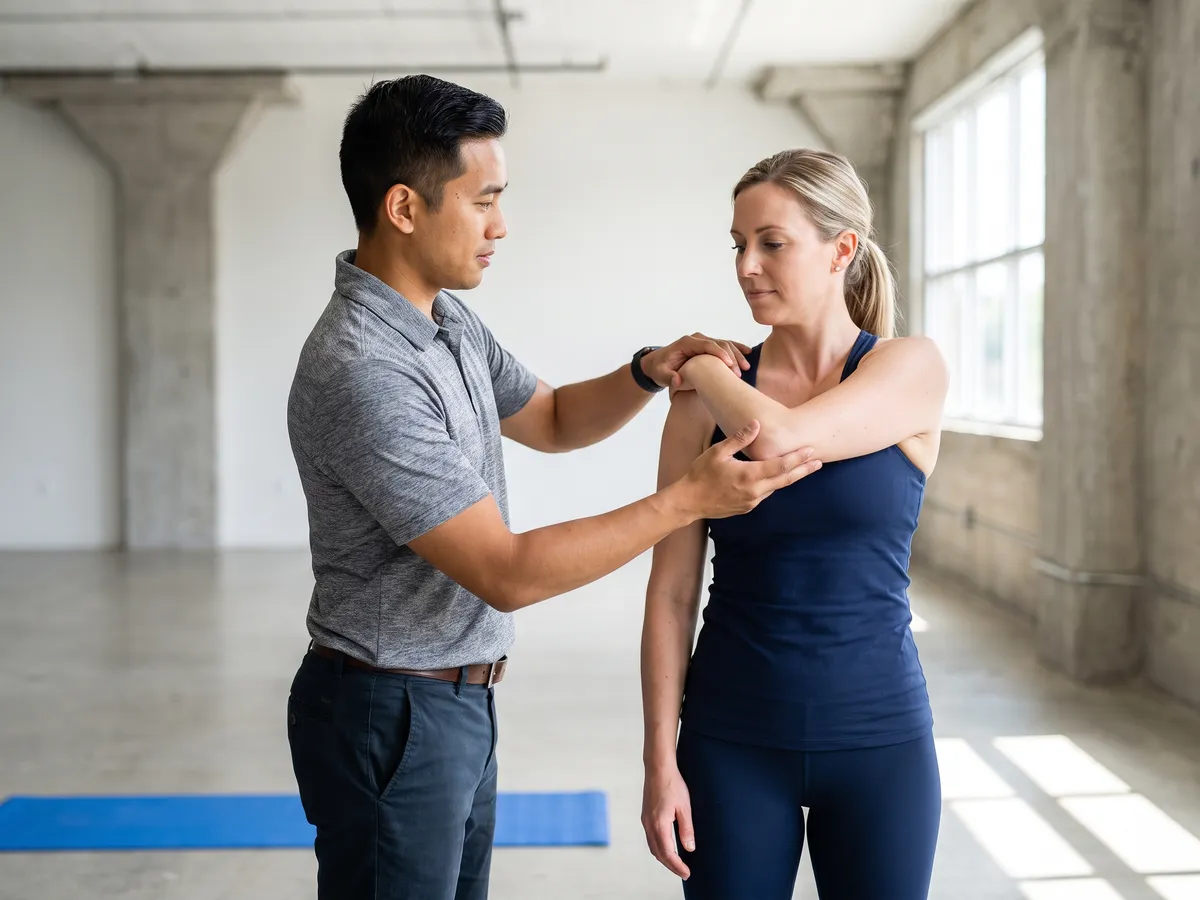
The pinch when you reach for the top shelf. The serve, throw, or press you’ve been babying. Sleeping on that side isn’t an option anymore. It’s fixable, and it starts with a cause-first evaluation, one-on-one with a Doctor of Physical Therapy, every visit.
Sound Familiar?
Two or more? Keep reading.
Why It Happens
Your shoulder trades stability for range, so it depends on a lot of parts working together. When it hurts, it’s usually some mix: an irritated rotator cuff tendon, a shoulder blade that stopped moving and supporting the arm well, a stiff upper back, and repeated overhead loads in sport, work, or the gym before the tissue was ready.
None of that shows up on a quick glance. It takes a real, cause-first evaluation to sort out which piece is driving your pain. That’s why rest, ice, or a generic sheet of band exercises so often falls short: they treat the symptom, not the source. Find the real cause, and the fix gets clear.
The Honest Truth
You’re the athlete who plays through it. That’s exactly why it’s still hurting. Let’s fix the cause.
How We Fix It
Every plan has an endpoint. Here’s what the four phases look like for a shoulder.
Phase 1
Pain
Hands-on care, plus dry needling or cupping when they fit, eases irritated tissue starting at your first visit.
Phase 2
Prime
Mobility work for the shoulder, shoulder blade, and upper back restores the reach you’ve been guarding.
Phase 3
Perform
Progressive rotator cuff and shoulder blade strengthening builds the control your arm was missing.
Phase 4
Prevent
Overhead reaching, lifting, and your sport’s motions get tested under real load before you’re cleared: that’s the endpoint, not just another appointment.
My husband and I highly recommend Amanda Mills as an excellent physical therapist. She is very knowledgeable and takes her time to explain and find the best course of treatment. The dry needling has helped us both along with the physical exercises.
Shared by Lisa · Shoulder pain
Looking for the best course of treatment, explained clearly
Dry needling and physical exercises that helped them both
Questions, Answered
Usually it’s not the first step. Imaging can show wear that has nothing to do with your pain, so a scan doesn’t always point to the real cause. We start with a hands-on, cause-first evaluation to find what’s actually driving your symptoms. If anything we find calls for imaging or a surgeon’s opinion, we’ll tell you and help you get there. You don’t need a referral to get started.
Often, yes, with the right changes. Total rest tends to leave a shoulder stiffer and weaker, which sets up the next flare-up. The key is dosing the right load and range for your shoulder, which Dr. Mills sorts out at your evaluation, then progresses as you improve. You may not need to stop training. You may just need to train it differently for a while.
It depends on what we find at your evaluation, so we won’t guess before we’ve seen you. What you will get is a plan with an endpoint. Your care moves through four phases, Pain, Prime, Perform, and Prevent, and you’ll always know which phase you’re in and what’s left for your shoulder. Care is one-on-one with a Doctor of Physical Therapy, every visit, not an open-ended string of appointments.
Book Your Visit
Request a time and a real person calls you back during office hours. No phone tree. No ‘someone will reach out.’ Just a plan.
5.0 · 64 Google reviews
Step 1 of 5
That’s the hard part done. We’ll call during office hours, Monday to Friday, to lock in your time.
Visit Us