Phase 1
Pain
Calm the pain down.
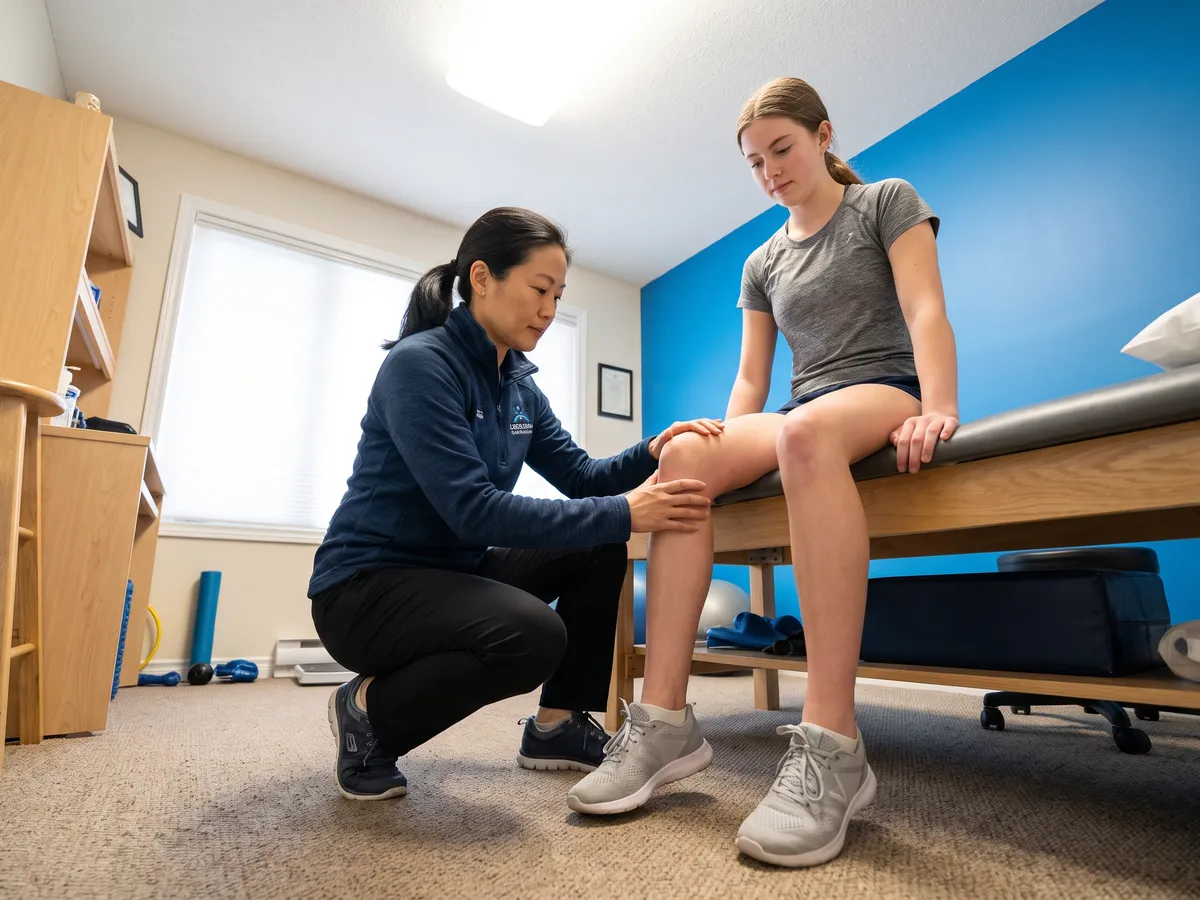
Hands-on techniques calm the irritated tissue around your knee and take the edge off, starting your first visit.
What We Treat
The stairs you take one at a time. The squats you skip at the gym. The ache that shows up a few miles into a run. It’s fixable, and it starts with a cause-first evaluation, not a guess.
Sound Familiar?
Two or more? Keep reading.
Why It Happens
Your knee usually hurts because of what’s happening above and below it. And it’s rarely just one thing. It’s usually some mix of a few culprits. Tendons around the kneecap that got overloaded. Hips and glutes that stopped controlling how the knee tracks. Stiff ankles that push extra work up the chain. And training spikes, more miles, more games, more stairs, before the tissue was ready.
After surgery, like an ACL repair, the missing piece is often strength and confidence that never fully came back. It takes a real, cause-first evaluation to sort out which piece is driving your pain. That’s why rest, ice, and a brace so often fall short: they treat the symptom, not the source. Find the real cause, and the fix gets obvious.
The Honest Truth
You’re the one who tapes it up and plays anyway. That’s exactly why it keeps coming back.
How We Fix It
Every plan has an endpoint. Here’s what the four phases look like for a knee. How long each one takes depends on what we find.
Phase 1
Pain
Hands-on techniques calm the irritated tissue around your knee and take the edge off, starting your first visit.
Phase 2
Prime
Mobility work restores the bend and straightening your knee has been guarding, plus the hip and ankle motion around it.
Phase 3
Perform
Progressive quad, glute, and single-leg strength builds a knee you can load without second-guessing it.
Phase 4
Prevent
Running, jumping, cutting, and stair mechanics get tested under real load before you go all-in: that’s the endpoint, not just another appointment.
Torn my ACL and 4 months later I’m back to the same shape
Shared by Kelsey G. · ACL recovery
Torn ACL
4 months later: back to the same shape
Questions, Answered
Usually not. Imaging has its place, especially after a big injury, but many knee problems can be sorted out with a hands-on, cause-first evaluation. If your exam points to something that needs a scan or a physician, we’ll tell you and point you to the right next step. You don’t need a referral to start.
In most cases, yes, with the right exercise at the right dose. Hurt doesn’t always mean harm, and resting a knee too long tends to leave it weaker and stiffer. Dr. Mills picks the movements your knee can handle today, then progresses them as it gets stronger. After surgery, your plan follows your surgeon’s guidelines.
It depends on what we find, so we won’t guess before we’ve evaluated your knee. What you will get is a plan with an endpoint. It runs through the four phases, Pain, Prime, Perform, and Prevent, and you’ll always know which phase you’re in and what’s left. No open-ended string of appointments.
Book Your Visit
Request a time and a real person calls you back during office hours. No phone tree. No ‘someone will reach out.’ Just a plan.
5.0 · 64 Google reviews
Step 1 of 5
That’s the hard part done. We’ll call during office hours, Monday to Friday, to lock in your time.
Visit Us